 Total Heart Sim
Home › Learn EP
Learn EP on a beating 3D heart.
Free, referenced explainers from Total Heart Sim: the standard ICE views with the imaging plane shown in 3D, and the arrhythmias conducting through the heart beside the EP recording. Each page opens straight into the simulator.
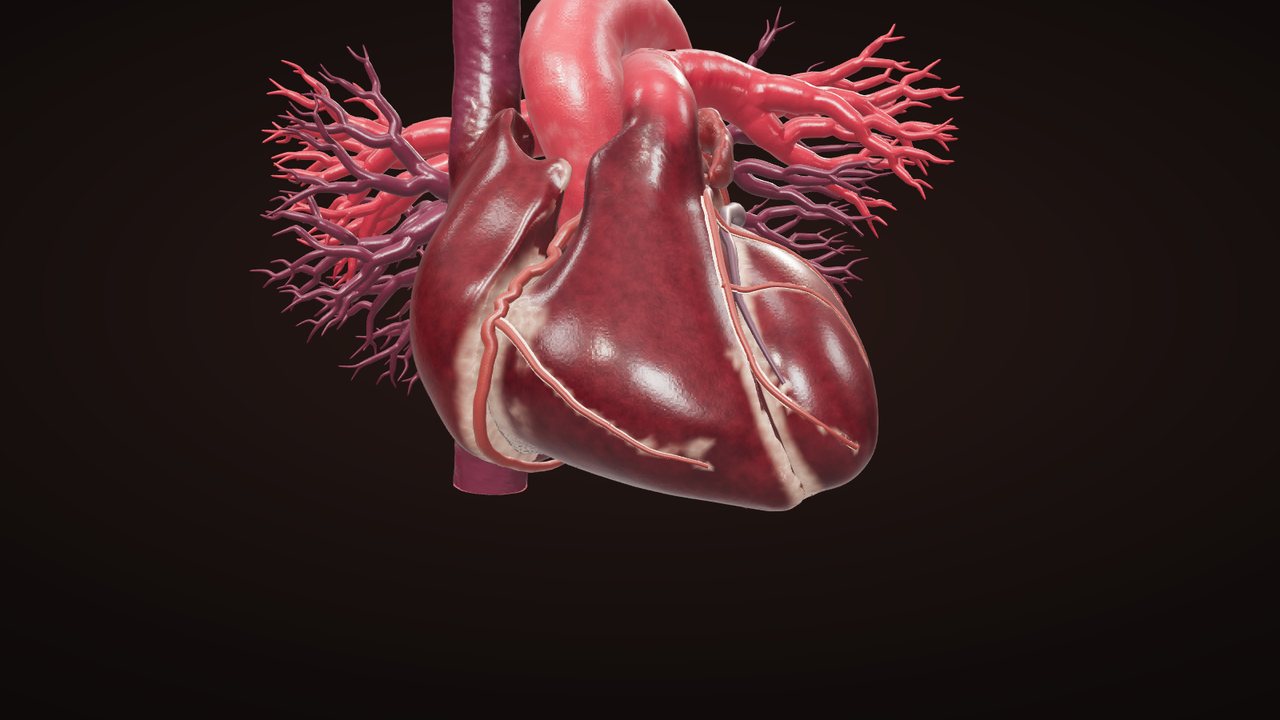
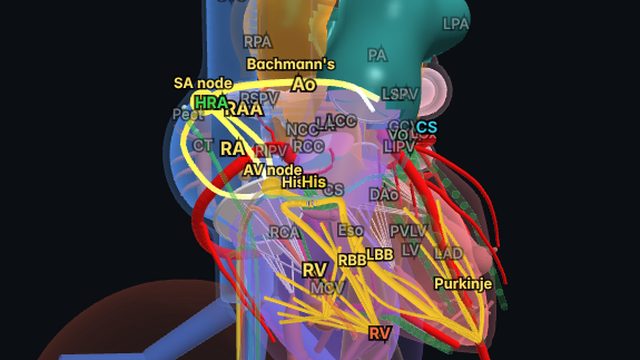
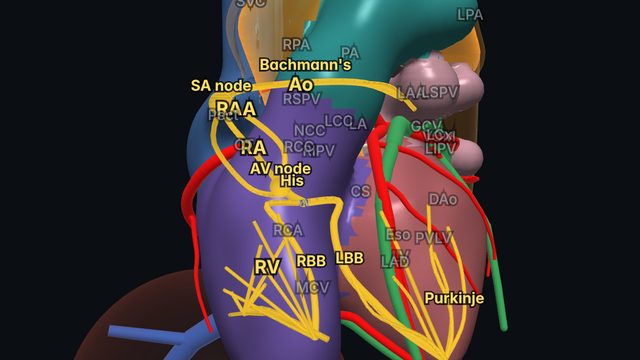
Interactive · free in your browserExplore a beating 3D heartTurn it, open each chamber, slice through it and watch the sinus impulse travel from the sinus node through the His bundle to the Purkinje fibres, in step with the ECG.Start the 3D heart →
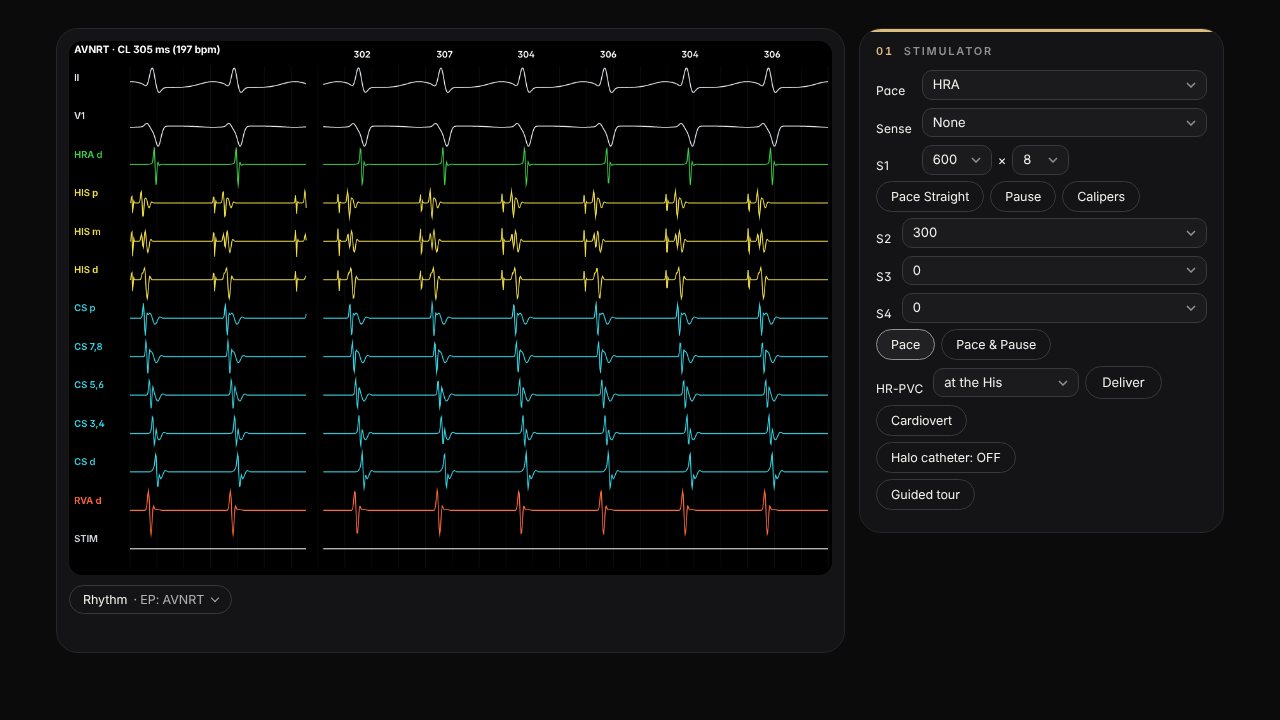
Interactive · in your browserEP StimulatorRun an EP study: pace from the HRA, CS or RV with S1–S4 and burst pacing, induce AVNRT, AVRT, flutter and VT, entrain, deliver an HR-PVC and read the 13-channel recording.Open the EP Stimulator →
ICE views atlas
All ten views, around the clock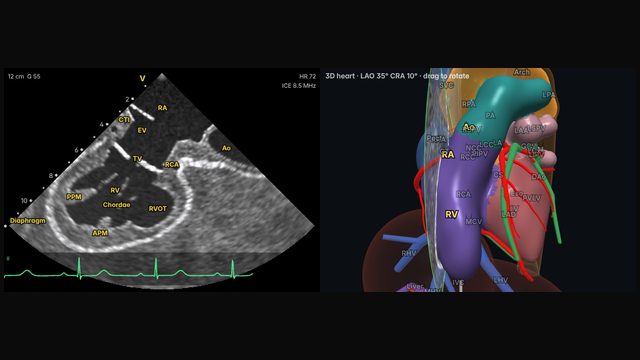
Home viewMid right atrium, neutral catheter: the tricuspid valve and RV. Every other view starts here.
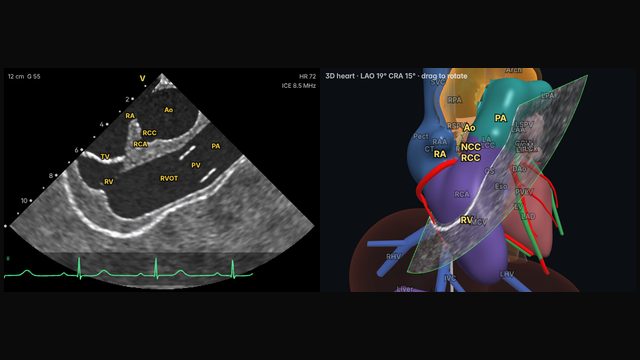
RV outflow and pulmonary valveThe outflow of the right ventricle up to the pulmonary valve: key for outflow tract VT and PVCs.
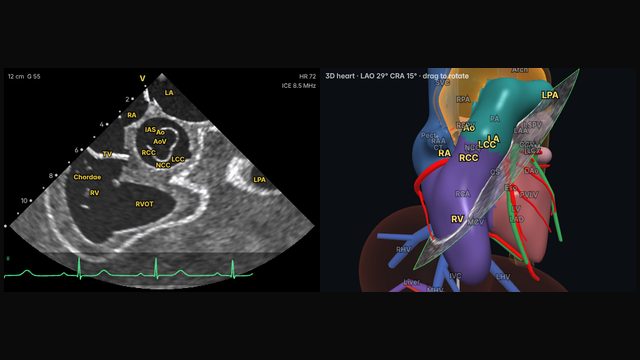
Aortic valveA small clockwise turn from home brings in the aortic root and its cusps.
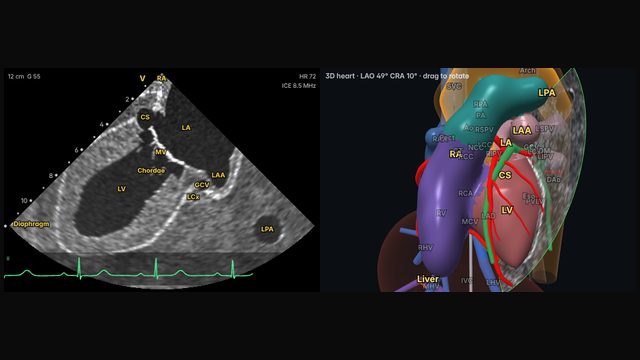
Left atrium and mitral valveFurther clockwise, across the septum: the left atrium with the mitral valve beyond.
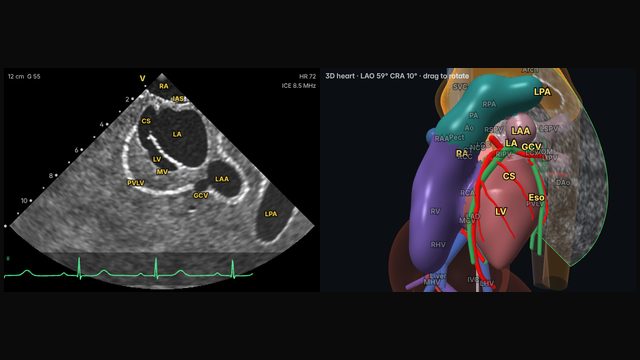
Left atrial appendageThe appendage at the edge of the left atrium: far from the catheter in the RA, which limits detail.
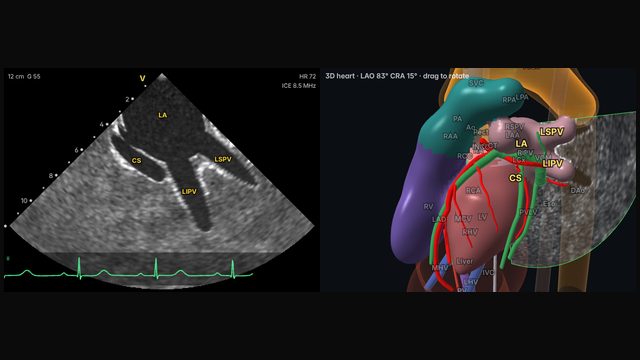
Left pulmonary veinsThe left superior and inferior veins entering the left atrium: a core view for AF ablation.
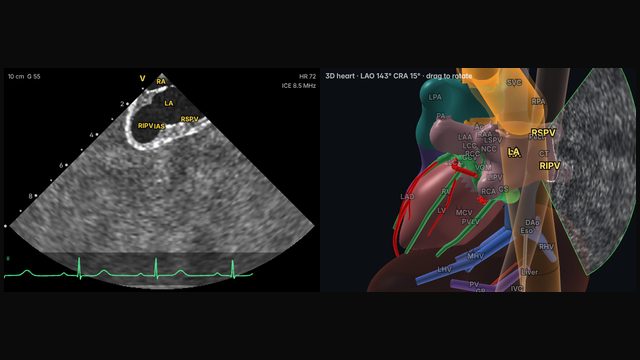
Right pulmonary veinsThe right-sided veins, close behind the septum: more rotation and deflection than the left veins.
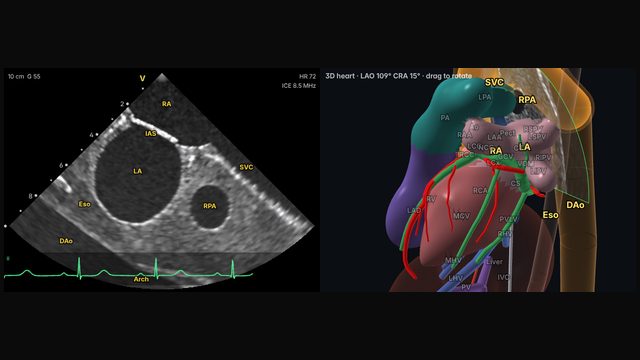
Septal view and fossa ovalisThe interatrial septum and fossa ovalis in the near field: the view for transseptal puncture.
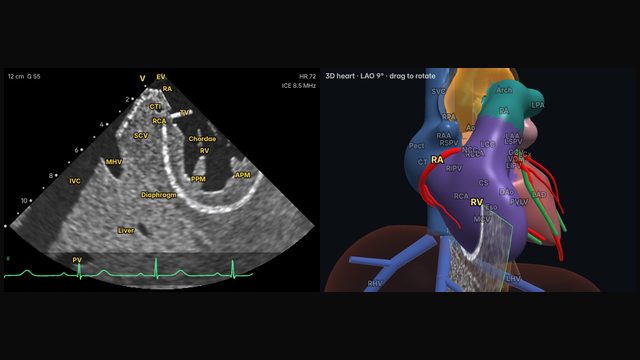
Cavotricuspid isthmusThe strip between the IVC and the tricuspid valve: the target for typical flutter ablation.
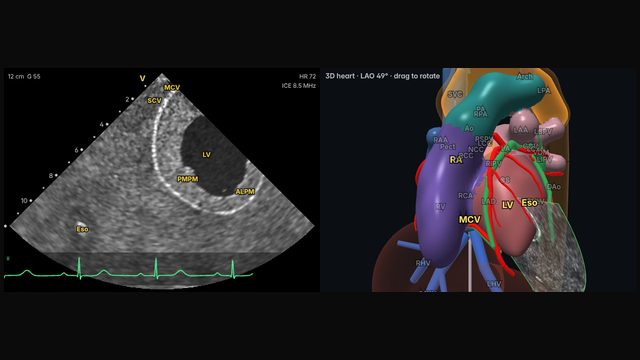
LV short axis and pericardiumThe left ventricle in cross-section with its papillary muscles, and the pericardial space around it.
Arrhythmia library
Supraventricular tachycardia
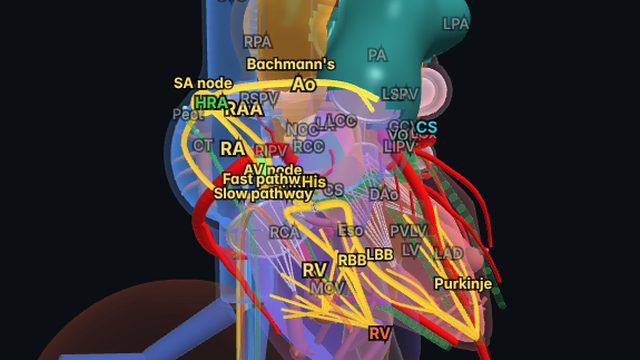
AVNRTRe-entry inside the AV node: down the slow pathway, up the fast one. Includes AVNRT with 2:1 block and inducible dual pathways.
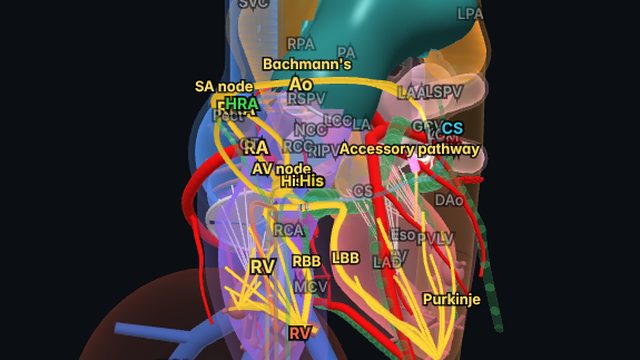
Orthodromic AVRTDown the AV node, back up an accessory pathway: the commonest pathway-mediated tachycardia, including concealed pathways.
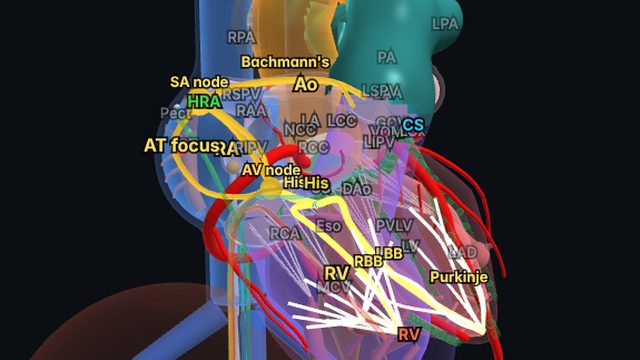
Focal atrial tachycardiaA single atrial focus firing fast, with Wenckebach or 1:1 conduction. The classic mimic of AVNRT and AVRT.
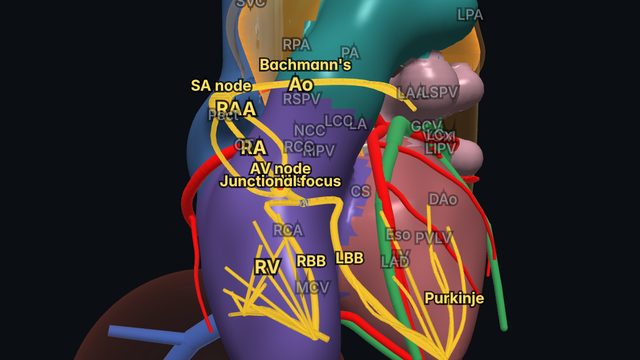
Junctional tachycardiaAn automatic focus in the AV junction drives the ventricles normally and the atria backwards.
Accessory pathways and pre-excitation
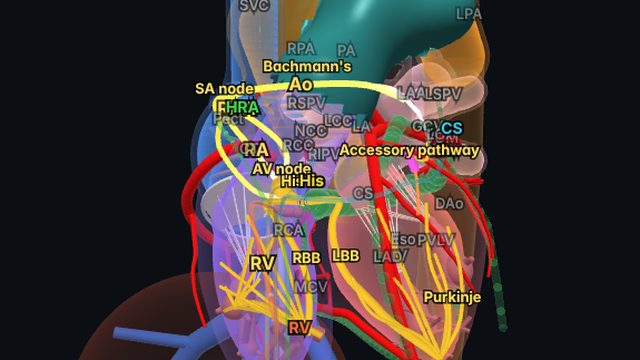
WPW and pre-excitationManifest left lateral and posteroseptal pathways: short PR, delta wave and a fused QRS.
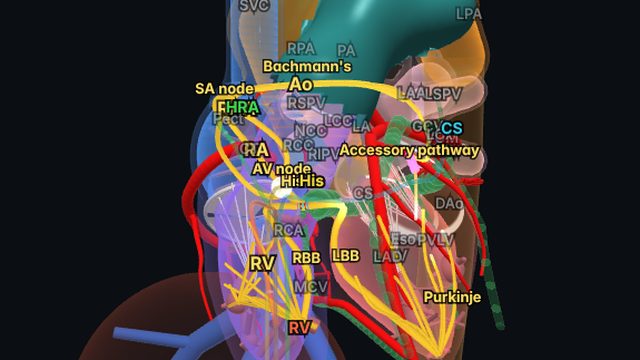
Antidromic AVRTDown the pathway, up the AV node: a wide, fully pre-excited tachycardia that looks like VT.
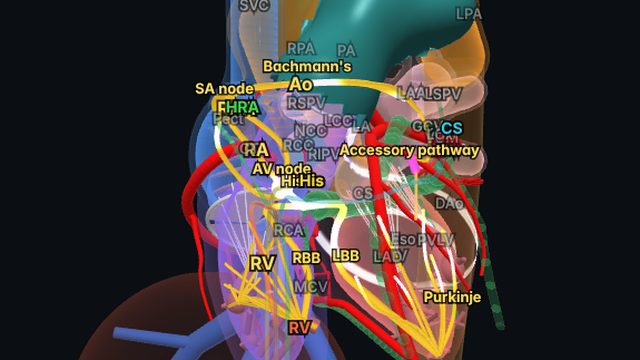
Pre-excited AF (FBI)AF conducting down a fast accessory pathway: fast, broad, irregular and potentially lethal.
Atrial flutter and fibrillation
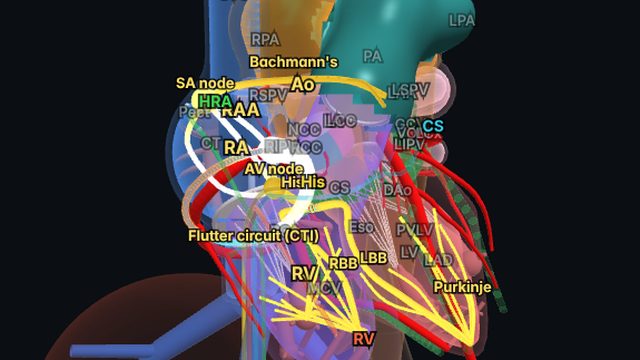
Typical atrial flutterMacro-re-entry around the tricuspid annulus through the cavotricuspid isthmus. Includes the inducible substrate.
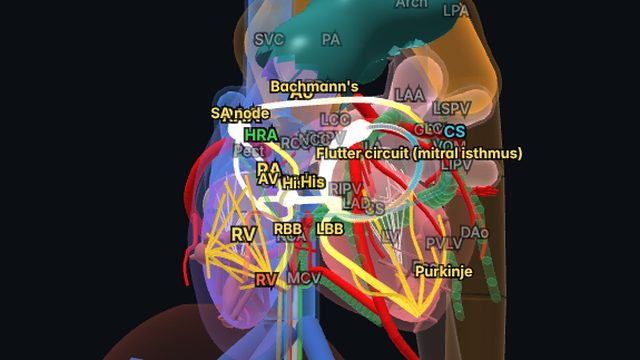
Peri-mitral flutterLeft atrial macro-re-entry around the mitral annulus, in both directions, plus inducible substrates.
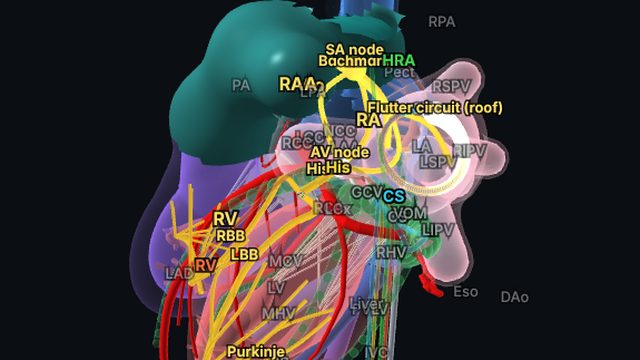
Roof-dependent flutterLeft atrial re-entry around the pulmonary veins through the LA roof, plus an inducible substrate.
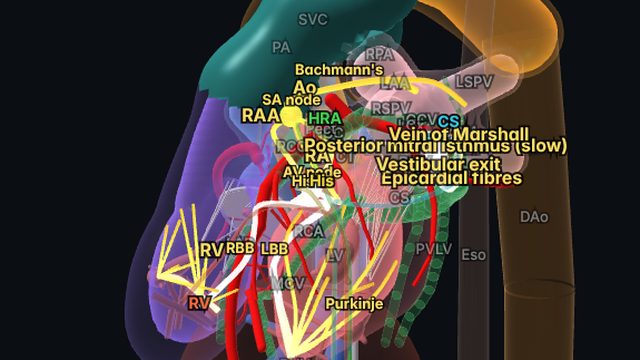
Marshall bundle re-entryA small left atrial re-entry through the Marshall bundle that looks like a focal tachycardia.
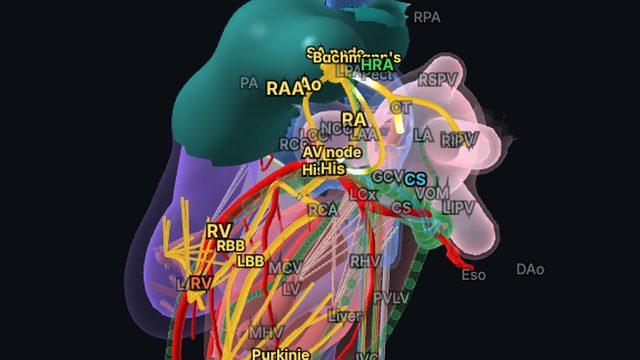
Atrial fibrillationChaotic atrial wavelets and irregular AV conduction: the commonest sustained arrhythmia.
Ventricular arrhythmias
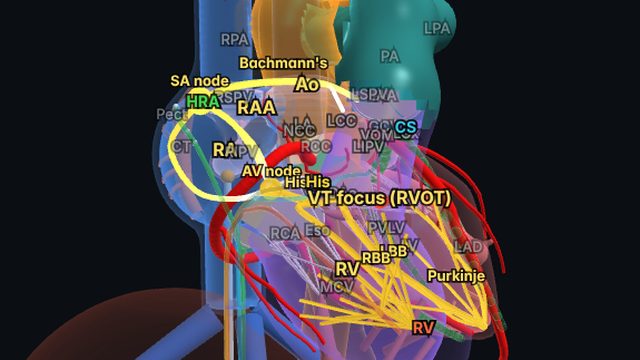
RVOT VTIdiopathic focal VT from the RV outflow tract, usually in a structurally normal heart.
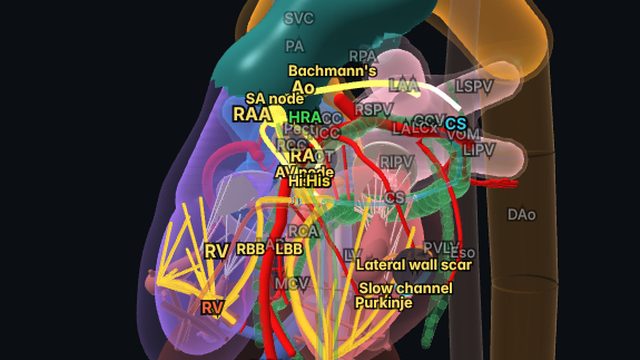
Scar re-entrant VTRe-entry around an LV scar through a slow channel. Includes programmed stimulation and ATP.
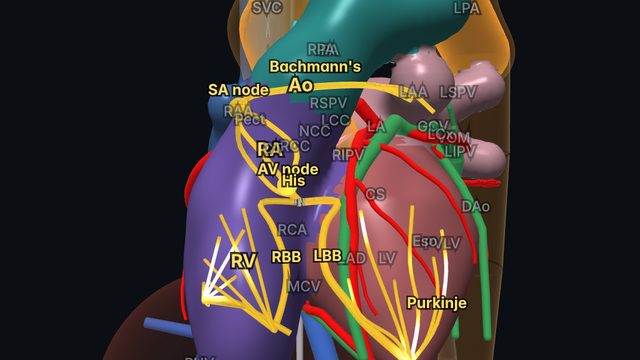
Ventricular fibrillationChaotic ventricular activation with no effective contraction: cardiac arrest.
Normal rhythm and bradycardia
Steer the catheter, run the EP study and slow every rhythm down.
Educational content for clinicians and trainees; not medical advice. The simulator's anatomy and rhythms are simplified models for teaching.